
Eight Glasses Is a Habit, Not a Rule
Food and other drinks count toward your water intake. Understanding that is more helpful than trying to fit every day into eight identical glasses.
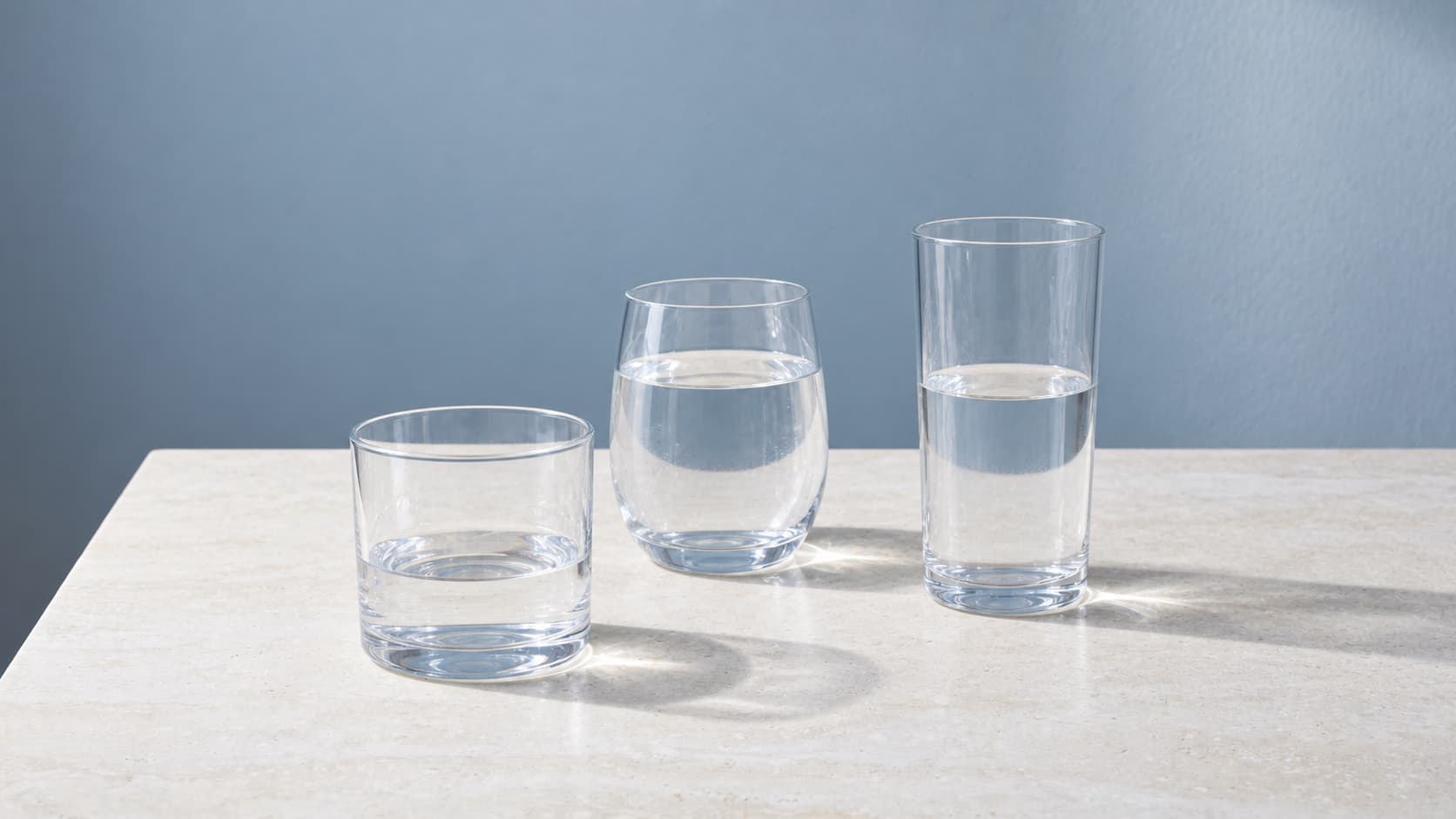
Editorial · not medical advice
You do not need to drink eight glasses of plain water every day to satisfy a universal scientific requirement. The familiar target can be a convenient reminder, but individual needs vary, and water also arrives in food and other drinks.
The confusion often begins with the official reference figures. They describe total water intake. Reading them as a plain-water quota can mean counting only part of what you consume.
What the reference figures include
The National Academies’ dietary reference report gives Adequate Intakes of about 3.7 liters a day for adult men and 2.7 liters for adult women. Both include water in food and beverages.
An Adequate Intake is a population reference based largely on observed intake among generally healthy people. It is not an individualized prescription or a threshold below which everyone becomes dehydrated. The report describes normal hydration across a broad range of intakes.
In the survey data used for the report, beverages supplied about 81% of total water and food about 19%. Your own proportions may differ.
What counts during a day
A bowl of soup, fruit, yogurt and cooked grains all contribute water. So do milk, sparkling water, coffee and tea. You do not have to convert each meal into milliliters to recognize that it contributes.
Caffeine can increase urine output, particularly at higher doses or in people unaccustomed to it. That does not cancel the fluid in an ordinary cup of coffee or tea. Alcohol deserves separate caution because it can increase urine output, impair judgment and disrupt sleep; it should not be used as a hydration strategy.
Plain water is an easy everyday choice because it adds no sugar or calories. The CDC’s guidance on water and drinks also emphasizes that needs vary with activity and circumstances.
A routine you can adjust
Keep water available with meals and during the day. Take some with you when access will be inconvenient. For many healthy adults in ordinary conditions, thirst can help guide drinking without a fixed number of servings.
Heat, prolonged exercise and heavy sweating need more planning. Our guide to heat-safe hydration covers those adjustments. Vomiting or diarrhea can change both fluid and electrolyte replacement needs. These situations should not be handled by simply trying to finish a larger daily jug.
Thirst also has limits. Older adults may experience a weaker response; young children depend on caregivers. Pregnancy and breastfeeding have different reference intakes. Anyone with kidney, heart or liver conditions, a prescribed fluid restriction or an individualized rehydration plan should follow clinical advice.
If eight glasses helps you remember to drink, it may work as a personal habit. There is no need to force extra water at night simply because the count is short. Check what the day involved, allow for food and other drinks, and adjust the routine when your circumstances change.
Sources
- National Academies: Dietary Reference Intakes for Water, Potassium, Sodium, Chloride, and Sulfate—Water
- National Academies: Dietary Reference Intakes—Report Summary
- CDC: About Water and Healthier Drinks
- National Institute on Alcohol Abuse and Alcoholism: Hangovers
- MedlinePlus: Dehydration
- MedlinePlus: Fluid and Electrolyte Balance
Sources checked September 15, 2026.
More from the Journal
Water Quality
How the Next Drinking-Water Watchlist Actually Works
EPA’s candidate list identifies subjects for further attention. Its monitoring rule would collect occurrence data. Here is how to tell which process a headline describes.
Water Policy
Why Different Water Uses Need Different Treatment
A cooling system, an irrigated field and a drinking-water supply need different safeguards. EPA’s reuse plan supports projects designed around those uses.