
The Line That Splits the Ocean in Two
The ocean is not one body of water. A boundary most people never think about divides it into an upper world and a lower one, and almost nothing crosses easily between them. Here is what that line is, and why the water below it is a different thing entirely.
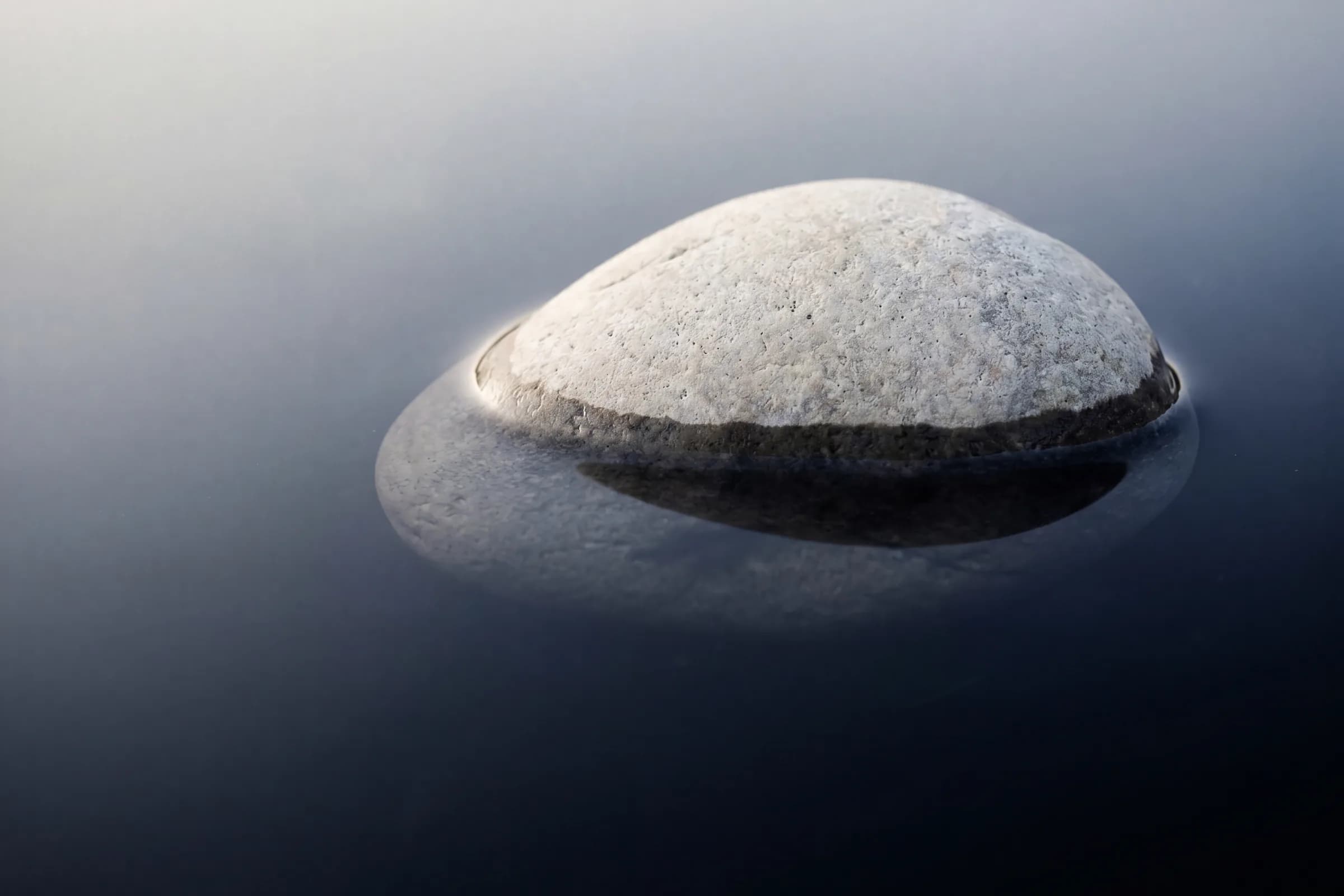
Editorial · not medical advice
When you picture the ocean, you probably picture the surface. Waves, sunlight, the part that moves. That layer is real, but it is thin, and it sits on top of something vast and almost completely separate.
Most of the ocean is cold, dark, and still. It is divided from the surface by a boundary made of temperature, and that boundary shapes what the deep ocean is in ways the surface never sees.
The Ocean Is Layered
The ocean separates itself into layers by temperature and density. The upper layer is warm, lit by the sun, and constantly stirred by wind and waves. It is the part that exchanges freely with the air above it.
Beneath that sits a much larger volume of cold, dense water that behaves almost like a different ocean. It is darker, more stable, and far less disturbed. The two layers share a surface area but very little else.
The Thermocline Is the Border
The boundary between them is called the thermocline, a zone where temperature drops sharply as depth increases. Because cold water is denser than warm water, this change in density resists mixing. It acts as a barrier between the layer above and the layer below.
Above the thermocline, water churns, warms, cools, and trades constantly with the atmosphere. Below it, water can stay stratified and undisturbed for long stretches of time. Crossing that line, in either direction, is slow.
The thermocline is not a line on a map. It is a boundary made of temperature and density, and it decides how slowly the surface and the deep ocean trade places.
What Stays Near the Surface
The upper layer is where almost everything happens. Sunlight, weather, the warmth that drives marine life, and the inputs that arrive from land and human activity all concentrate in and near the surface. The thermocline slows how quickly any of it moves down into the deep layer.
This is a statement about circulation, not a verdict on any single bottle of water. It means the deep layer is shaped by a different set of conditions than the surface, exchanging with it only gradually rather than constantly.
Why the Deep Layer Holds Its Minerals
Stability and time do something specific to deep water. As cold water circulates slowly through the deep layer over long periods, it holds dissolved minerals in solution the entire time. The result is water with a mineral profile shaped by where it has been and how long it has stayed there.
This is why depth alone is not the point. It is the combination of cold, stability, and time below the thermocline that gives deep ocean water its character, not the number on a depth gauge.
Depth Is a Starting Point, Not a Guarantee
Here is the part that matters most, and the part marketing usually skips. The isolation of the deep layer shapes where a water begins. It does not tell you what is in the glass.
Depth changes the starting conditions. It does not replace measurement. The only honest way to know what a deep-sourced water actually contains is to test it against accredited methods and read the results, rather than assuming the depth did the work. A source is a beginning, not a conclusion.
Where Unbelievable Water Fits
Unbelievable Recovery is drawn from 510 meters below the surface off Sokcho, South Korea, in the East Sea, from the deep layer that sits beneath the thermocline. The source environment is cold, stable, and separated from surface mixing, which is where its mineral profile begins.
What the water actually contains is confirmed by accredited third-party testing, not assumed from how deep it sits. The depth explains where the water starts. The testing is what tells you where it ends up.
More from the Journal
Mineral Science
When Electrolytes Actually Matter
Ordinary meals, prolonged sweating and gastrointestinal illness call for different approaches to fluid and mineral replacement.
Hydration
Clear Urine Is Not the Hydration Goal
Urine color changes with recent drinking, time of day, foods and medicines. It can help you notice a pattern, but it cannot diagnose hydration on its own.