
What Dissolved Minerals Are, and Why Water Carries Them
Mineral water and purified water can look identical in the glass. The difference is dissolved, invisible, and measured in milligrams. Here is what those minerals are, where they come from, and why some waters carry them while others do not.
Editorial · not medical advice
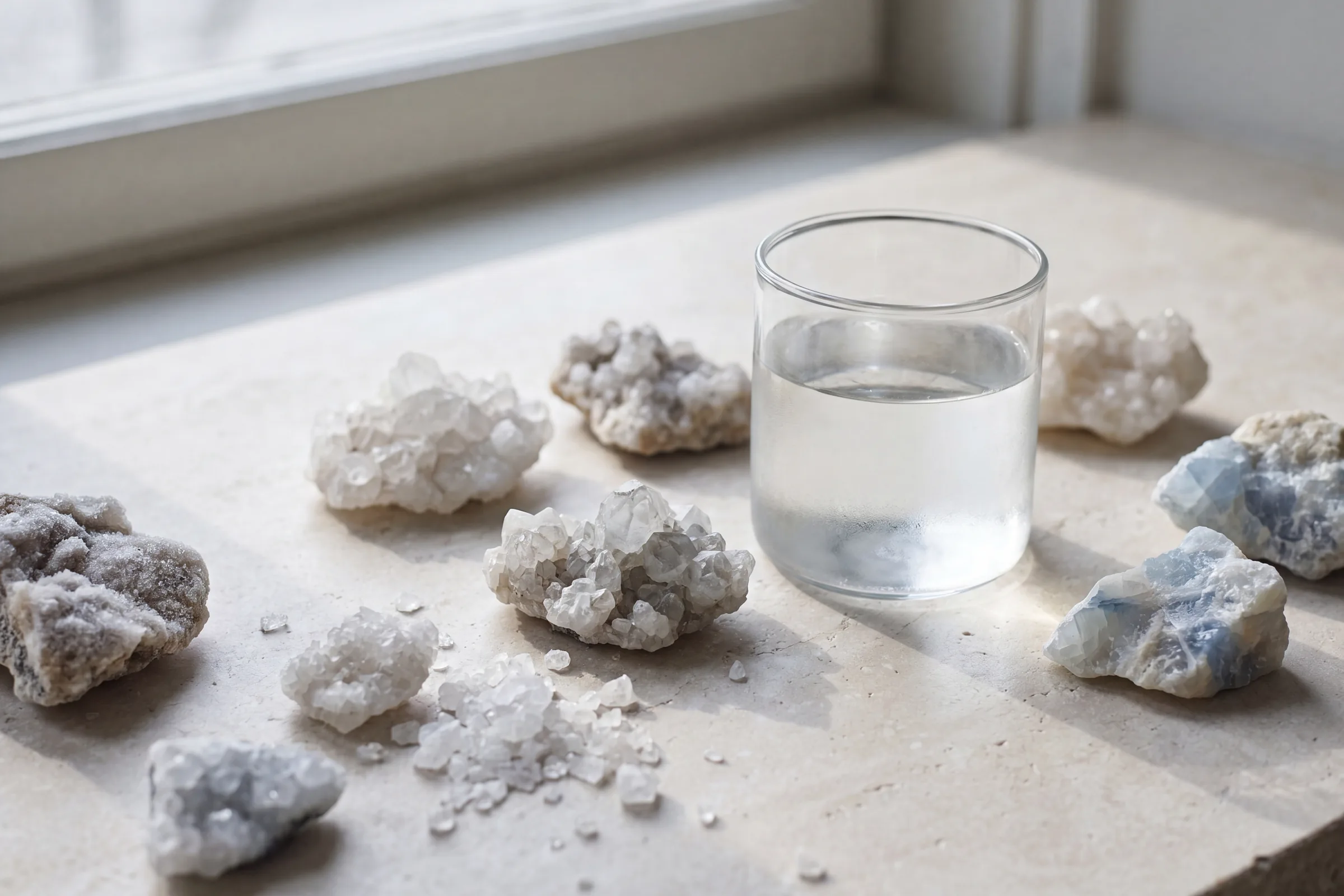
When people say a water is mineral-rich, they are not talking about anything you can see. The minerals are dissolved into the water itself, broken down into charged particles spread evenly through the glass. That is why two waters can look the same and measure completely differently.
This is one of the few things about water that is genuinely worth understanding. The mineral content shapes how a water tastes, how it feels, and what separates a natural mineral water from water that has been stripped down to almost nothing. None of it is visible. All of it is measurable.
What "Dissolved Minerals" Actually Means
A dissolved mineral is not a grain sitting at the bottom of the bottle. It is an ion, a charged particle that has separated from its mineral source and spread through the water in solution. Calcium, magnesium, potassium, sodium, and bicarbonate are the ones that show up most often.
These are measured in milligrams per liter. When a lab reports the mineral profile of a water, it is counting those dissolved ions, not particles you could filter out. This is also part of what a TDS meter responds to, which is why TDS and mineral content get confused for each other so often.
Where the Minerals Come From
Water is a solvent before it is anything else. As it moves through rock, soil, and the ocean, it dissolves small amounts of the material it touches and carries those minerals with it. The geology of the source decides the profile.
The deep ocean is mineral-bearing by nature. Seawater circulates through the deep layer over long periods, holding magnesium, calcium, potassium, and sodium in solution the entire time. A water sourced from that environment arrives already carrying its minerals, rather than depending on minerals introduced later.
Minerals in water are not added flavor. They are dissolved ions the water picked up from the rock and sea it moved through. Stripping them out is a process choice. So is putting them back.
Why Some Waters Have Them and Others Do Not
Two things decide whether a water carries minerals. The first is geology, what the source water moved through before anyone bottled it. The second is processing.
Reverse osmosis and distillation remove almost everything from water, minerals included. The result is a very low-mineral water, clean but close to empty. Some brands stop there. Others reintroduce a measured dose of minerals afterward, which is why a label may list mineral content on water that started out stripped.
This is not a failure of one method or a victory for another. It is a choice worth knowing about, because the label alone will not always tell you which path the water took.
What Minerals Do for the Water Itself
Set aside the body for a moment and consider the water on its own terms. Mineral content is a large part of why waters taste different from one another. Calcium and magnesium in particular contribute to what tasters describe as structure, body, or mouthfeel.
A near-zero-mineral water often reads as flat or thin by comparison. A naturally mineralized water tends to read as fuller and rounder on the palate. This is sensory, not medical, and it is the reason mineral profile sits at the center of how water is evaluated by people who taste it for a living.
Naturally Occurring or Reintroduced
This is the distinction that matters most, and the one labels obscure most often. A naturally mineralized water carries its mineral profile from the source, unchanged in kind from what the geology gave it. A remineralized water has its minerals stripped out and then added back.
Both can be good waters. They are not the same thing. When a water tells you it contains minerals, the honest follow-up question is whether those minerals arrived with the water or were dosed in afterward.
Where Unbelievable Water Fits
Unbelievable Recovery is natural mineral water sourced 510 meters below the surface off Sokcho, South Korea, in the East Sea. The minerals it carries arrive with the source water from that depth, rather than being introduced after processing.
It naturally contains magnesium and calcium that support cellular hydration. Where the source provides the minerals, accredited third-party testing confirms what is, and is not, present in the bottle. That is the whole point of a water that carries its profile rather than borrowing one.
More from the Journal
Water Policy
Why Different Water Uses Need Different Treatment
A cooling system, an irrigated field and a drinking-water supply need different safeguards. EPA’s reuse plan supports projects designed around those uses.

Stewardship
Beverage Packaging Has Entered a New Accountability Era
California and the EU are changing packaging requirements on different schedules. Here is what the rules measure, and what a bottle’s label can actually establish.