
The Water in Your Ice Matters
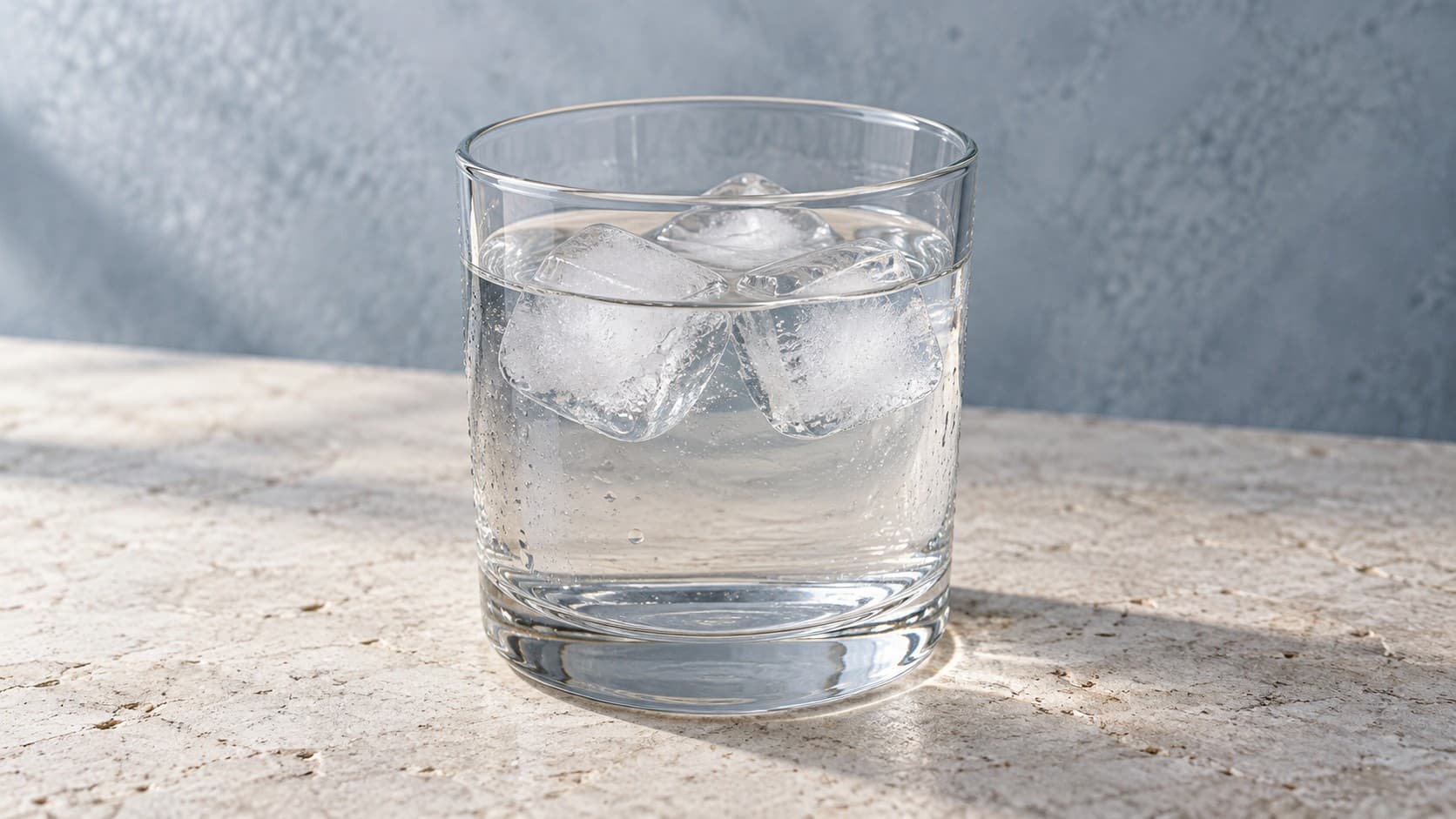
As ice melts, its water becomes part of your drink. Pay attention to the source, freezer storage and serving routine—not just the bottle you pour.
Editorial · not medical advice
Pour a carefully chosen water over ice from a different source and the glass gradually becomes a blend. The bottle may have a detailed mineral analysis; the cubes rarely get the same attention.
For a dinner table or a quiet glass at home, there are three practical questions: what water made the ice, how it was stored, and what touched it before it reached the glass.
Meltwater changes the serving
Consider a simple example: 200 mL of poured water plus 50 mL of melted ice makes about 250 mL in the glass. One fifth of that liquid came from the ice. Those are illustrative volumes, not results from a tasting or a claim about how quickly cubes melt.
Whether you notice a flavor difference depends on the waters and the serving conditions. Adding ice also changes temperature, so a colder glass that tastes different does not isolate the effect of the ice's source water.
If you want to compare bottled waters, chill them beforehand and leave out the ice. That removes one variable from the comparison. Our home water-tasting guide explains how to keep glassware, temperature and sample identity under control.
For everyday serving, ice is a preference. You can make it from the same drinking water you plan to pour, or use another drinking water whose taste you enjoy. Neither choice establishes that one water is safer or healthier. Follow the tray or ice-machine manufacturer's instructions; this is not a recommendation to freeze a sealed bottle.
Check the freezer before changing the bottle
GE Appliances' refrigerator guidance identifies uncovered or spilled food, older ice, the incoming water and an overdue filter as possible reasons for off-tasting cubes. A familiar freezer odor may therefore follow the ice into a freshly poured glass.
Keep food well wrapped, use clean covered containers intended for food storage, and refresh ice that has sat unused. Clean trays and storage bins according to their instructions. For a plumbed ice maker, follow its maintenance schedule and the filter maker's replacement guidance rather than assuming that a filter lasts indefinitely.
This is troubleshooting guidance, not a way to diagnose water safety. Do not taste suspicious ice or water to decide whether it is safe. An unexplained change in color or odor calls for checking the supply and equipment before serving it.
Cloudiness needs context
A white center can form in ordinary refrigerator ice because of trapped air and dissolved minerals. GE's explanation for refrigerator cubes distinguishes this cloudiness from unusual discoloration.
The appliance matters. For a standalone ice maker that normally produces clear cubes, GE says cloudiness can indicate scale buildup and a need for cleaning. Check the instructions for the machine you actually own.
Neither a clear cube nor a cloudy one is a laboratory result. Appearance alone cannot certify the water or tell you its mineral concentration.
Treat the cubes as food
FDA regulates packaged ice sold across state lines as food. Its guidance covers safe source water, sanitary production and storage. Ice made and served directly by restaurants or shops falls under state and local oversight; this article is not a substitute for an establishment's food-safety requirements.
At home, FDA recommends clean, non-breakable scoops or tongs and clean food-safe storage containers. Do not use a drinking glass to scoop ice or handle it with dirty hands. Keep the serving utensil clean between uses.
During a drinking-water advisory, the ice supply needs attention too. CDC says not to use water or ice from appliances connected to the water line during any type of advisory. Follow the local instructions for making ice and returning equipment to service; changing the drink in the glass does not resolve an affected ice supply.
Before guests arrive, check the ice as deliberately as the glasses: suitable source water, clean storage, a clean scoop, and enough freshly prepared ice for the occasion. Then offer it separately so each person can choose how cold they want their water.
Sources checked September 26, 2026.
Sources
More from the Journal
Taste
Why the Water Changes Your Coffee and Tea
Water is the largest ingredient in a brewed cup. Its mineral composition and buffering capacity can change the drink, but more extraction does not necessarily mean better flavor.
Taste
How to Taste Water Like a Sommelier at Home
Set up a blind tasting with three or four waters, identical glasses and a scorecard. Compare what you notice before revealing the labels.