
Does Flying Really Dehydrate You?
Dry cabin air can make eyes, lips and skin uncomfortable. That discomfort alone does not tell you that the whole body is dehydrated.
Editorial · not medical advice
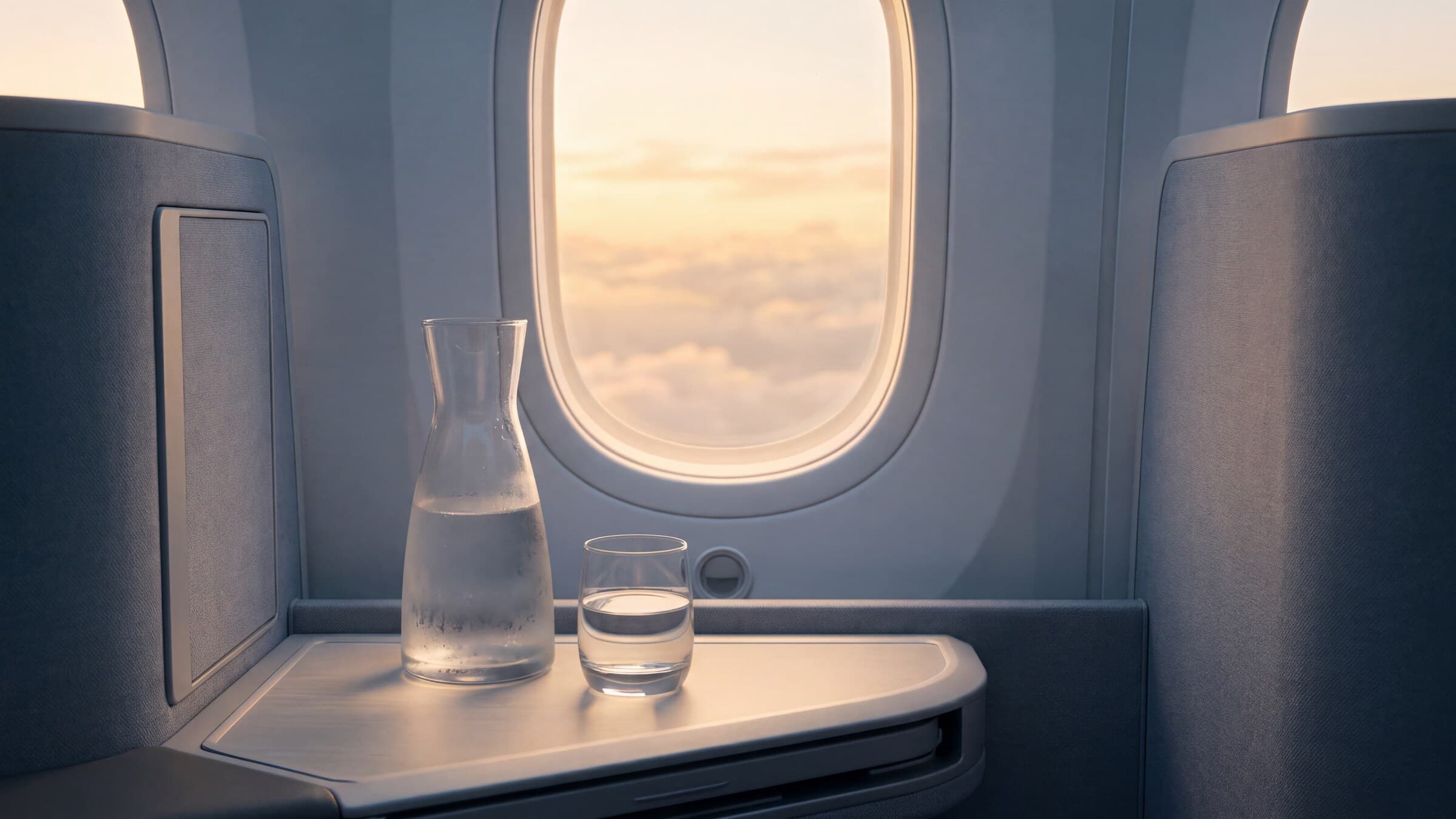
Commercial-aircraft cabins typically have humidity of around 10–20%, according to the CDC's air-travel guidance. That dry air can affect the eyes and upper airway. A scratchy throat after a flight is understandable, but it is not a measurement of overall water balance.
For a comfortable journey, it helps to separate three needs: access to drinks, care for dry eyes and skin, and opportunities to move. Drinking extra water cannot do all three jobs.
Dry surfaces send a loud signal
The UK Civil Aviation Authority's physiology guidance distinguishes local dryness from dehydration. It describes drying of the lips and tongue, and discomfort for contact-lens wearers, while explaining that low cabin humidity does not itself cause whole-body dehydration.
That is not a claim that travelers cannot become dehydrated. Inadequate intake, illness and a person's medical circumstances still matter. The narrower point is that a dry-feeling mouth, eyes or skin cannot establish the cause of every post-flight complaint.
The CAA's passenger guidance suggests skin moisturizer and lubricating eye drops for local discomfort, and removing contact lenses before sleeping on board. Follow product instructions and your eye-care professional's advice about suitable drops and lens care.
A glass of water cannot reset a body clock
Jet lag follows travel across time zones, when the internal body clock and local time no longer agree. The CDC's jet-lag guidance discusses sleep timing and appropriately timed light exposure. It also notes that dehydration can worsen physical symptoms. Staying hydrated matters, but it is not a substitute for adjusting sleep and light exposure.
Alcohol may make falling asleep easier while fragmenting sleep later; it is not a useful sleep aid. Caffeine close to planned sleep can also interfere with rest. Think about the time you intend to sleep before ordering another coffee.
Coffee and tea still contribute fluid—the NHS includes both in daily fluid intake. That does not make unlimited caffeine a good travel strategy, or remove individual reasons to limit it.
Movement and clot risk
The CDC's travel-related clot guidance does not find direct evidence that frequent hydration prevents travel-associated venous thromboembolism, the term covering deep-vein clots and pulmonary embolism. It considers maintaining hydration reasonable, but not a proven clot-prevention measure.
Prolonged immobility is a separate concern. CDC considers periodic walking and calf-muscle exercises reasonable on long journeys, although the prevention evidence for movement is indirect. Move when it is safe and follow cabin-crew instructions. People with elevated clot risk should discuss their travel plans with a clinician; decisions about compression stockings or preventive medicine are individualized.
A comfortable flight routine
Keep the routine modest:
- Have water available during the journey. For generally healthy adults, thirst can help guide drinking; avoid treating a bottle's size as a required target.
- Do not force large volumes just because cabin air feels dry. Our guide to drinking too much water explains why a higher total is not automatically better.
- Bring suitable eye-care supplies, glasses if you wear contact lenses, and moisturizer or lip balm for comfort.
- Limit alcohol and consider caffeine's timing relative to planned sleep.
- Move your legs and walk periodically when conditions and cabin-crew instructions allow.
If you have a prescribed fluid limit or drinking schedule, follow that plan while traveling. Ask your clinician about any medical condition that changes your fluid needs or travel precautions.
Sudden unexplained breathlessness, chest pain, fainting or coughing blood needs emergency help. New one-sided leg swelling, pain, warmth or redness needs prompt medical assessment. These symptoms have several possible causes; do not try to diagnose or treat them with water. If symptoms develop on board, alert the cabin crew.
Sources checked September 19, 2026.
Sources
More from the Journal
Hydration
Yes, You Can Drink Too Much Water
A bottle can be a useful reminder to drink. Its capacity is not a prescription, and finishing more water is not automatically healthier.

Mineral Science
When Electrolytes Actually Matter
Ordinary meals, prolonged sweating and gastrointestinal illness call for different approaches to fluid and mineral replacement.