
How to Store Bottled Water at Home
Give bottled water a clean, shaded place indoors, keep its dates visible, and separate everyday stock from emergency supplies. A simple storage routine starts before the cap comes off.
Editorial · not medical advice
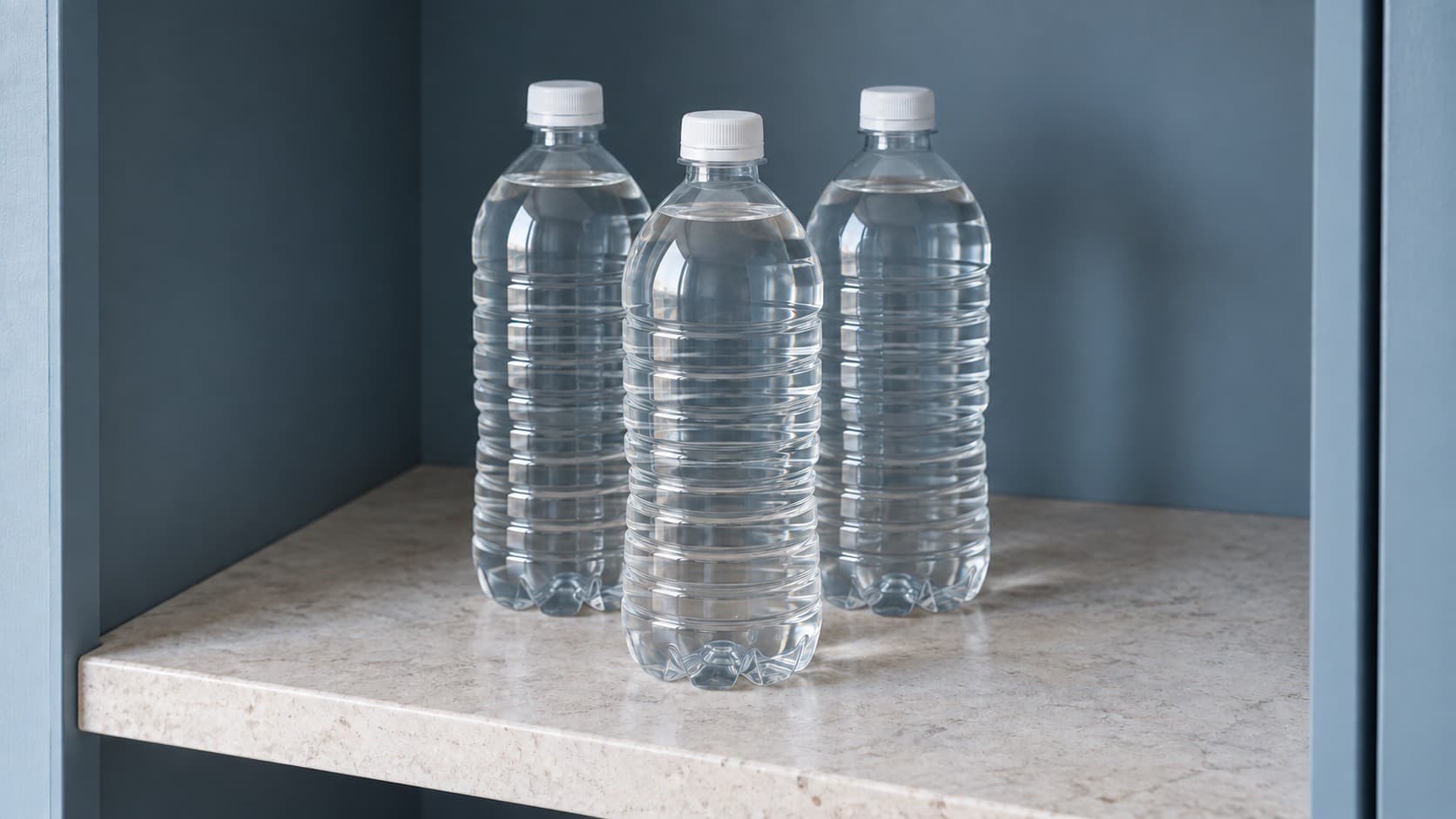
A case of water needs a place to live between the delivery and the glass. The convenient spot beside the garage door may also be the hottest part of the house, or the place where paint and cleaning products accumulate.
For unopened bottled drinking water, a small amount of planning makes storage easier: choose the location, keep the original information visible, and decide which bottles are for everyday use. Follow any product-specific storage instructions on the label.
Choose the shelf before stocking it
Michigan's public-health bottled-water storage guidance, prepared for Benton Harbor residents, recommends room temperature or cooler, no direct sunlight, and separation from chemicals such as cleaners, gasoline and paint thinner.
At home, that points toward a clean indoor cupboard or pantry rather than a sunny windowsill or a hot garage. Check the spot during the warm part of the day; a shelf that looks shaded in the morning may not stay that way. Keep the bottles and the surface beneath them clean, too. The guidance notes that contamination on a bottle's exterior can transfer to hands or the refrigerator.
Arrange the stock so you can reach it without moving household chemicals or balancing another case overhead. Leave enough room to see a leak or damaged package.
Keep the date and the seal
Keep unopened bottles in their original packaging with the product name, date and lot information available. When restocking, bring the bottles with earlier dates forward and place later-dated stock behind them. A quick phone photo of the case information can be useful if the carton is discarded.
For an emergency reserve, CDC advises observing the expiration date on store-bought water. Its six-month replacement advice applies to water you put into storage containers yourself. Those are different instructions for different supplies.
If a printed code is unclear, ask the producer what it means rather than guessing a shelf life. Once a bottle is opened, do not treat it as part of the sealed reserve; follow the maker's after-opening instructions. This guide does not assign every bottle the same opened-life deadline.
Separate everyday stock from emergency supplies
CDC's emergency planning baseline is at least one gallon per person per day for three days, with two weeks if possible. That water covers drinking and other uses, not a personal drinking target. Heat, illness, pregnancy and pets can increase the amount to plan for.
For four people, the three-day baseline works out to twelve gallons before additional needs. This is storage arithmetic, not a recommendation to drink a gallon each day.
Give that reserve a defined space and a reminder to review it. If you use bottles from it during an ordinary week, replace them rather than letting the reserve quietly become the household's last few bottles. Keep a separate, smaller everyday supply within easy reach.
Check the bottle before serving
Do not use a cracked or broken bottle, or one whose condition concerns you. Michigan's guidance makes that boundary explicit; a future date is not a reason to overlook damage.
Flood exposure needs a separate decision. FDA advises storing bottled water where it is protected from flooding and using bottles that have not been exposed to floodwater. An ordinary screw cap does not make a package floodproof. FDA also advises against drinking or using bottled water with an odor. Contact the supplier about a questionable bottle; do not taste it to decide whether it is safe.
When putting away the next delivery, check the shelf, the packages and the dates in one pass. Move earlier-dated bottles to the front, replenish the reserve, and leave the remaining stock somewhere clean and out of the sun.
Sources checked September 27, 2026.
Sources
More from the Journal
Taste
The Water in Your Ice Matters
As ice melts, its water becomes part of your drink. Pay attention to the source, freezer storage and serving routine—not just the bottle you pour.
Taste
Why the Water Changes Your Coffee and Tea
Water is the largest ingredient in a brewed cup. Its mineral composition and buffering capacity can change the drink, but more extraction does not necessarily mean better flavor.